View what's in this topic
Unterstützte Barcodes und passende QLingo-Parameter
Die folgende Tabelle gibt einen Überblick über die verfügbaren Barcodes, die von uPlan/uCreate unterstützt werden, und ihre entsprechenden QLingo-Namen. Weitere Informationen finden Sie unter http://www.tec-it.com/download/PDF/Barcode_Reference_EN.pdf
|
Barcode-Symbologie |
Name Parameter |
Beschreibung |
|---|---|---|
|
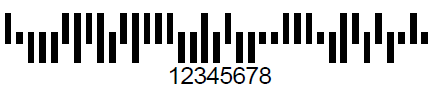
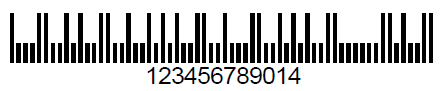
Australian Post Customer
|
AusPostCustom |
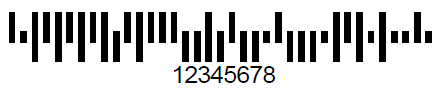
Wird von der australischen Post zur Markierung von Sendungen verwendet. Für Nachsendungen, Rückantworten usw. sind spezielle Codevarianten verfügbar. Aufgrund der Anzahl seiner Striche (37) wird Australian Post Customer auch als Australia Post 37-CUST bezeichnet. |
|
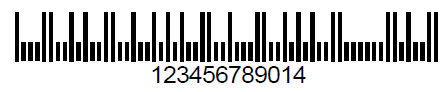
Australian Post Customer 2
|
AusPostCustom2 |
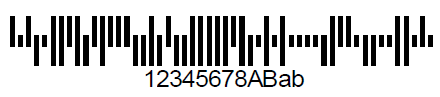
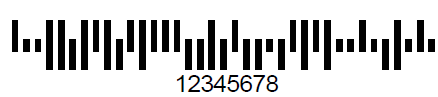
Dies ist der gleiche Barcode wie der Australian Post Standard Customer, aber mit 5 zusätzlichen Zeichen für kundenspezifische Daten. Die ersten 8 Zeichen müssen Ziffern sein. Diese Symbologie heißt (wegen ihrer 52 Striche) auch Australia Post 52-CUST. |
|
Australian Post Customer 3
|
AusPostCustom3 |
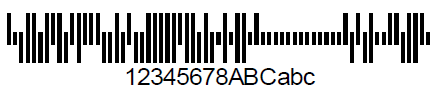
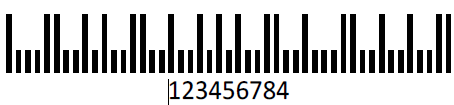
Dies ist der gleiche Barcode wie der Australian Post Standard Customer, aber mit 10 zusätzlichen Zeichen für kundenspezifische Daten. Die ersten 8 Zeichen müssen Ziffern sein. Diese Symbologie heißt (wegen ihrer 67 Striche) auch Australia Post 67-CUST. |
|
Australian Post Reply Paid
|
AusPostReplyPaid |
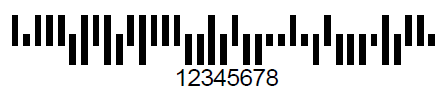
Wird von der australischen Post für den Service „Rückantwort bezahlt“ verwendet. |
|
Australian Post Routing
|
AusPostRouting |
Wird von der australischen Post für den Service „Sendungsbeförderung“ verwendet. |
|
Australian Post Redirection
|
AusPostRedirect |
Wird von der australischen Post für den Service „Nachsendung“ verwendet. |
|
Aztec Code
|
AztecCode |
Kann kleine bis große Datenmengen mit vom Benutzer gewählten Prozentsätzen der Fehlerkorrektur kodieren. Die Symbolgröße passt sich je nach der Menge der Eingabedaten automatisch an. |
|
Brazilian CEPNet
|
CetNet |
Wird von den brasilianischen Postdiensten verwendet. Eine 8-stellige PLZ wird kodiert. Die Prüfziffer wird automatisch berechnet. Sie kann nicht in den Eingabedaten angegeben werden. Die Kodierung basiert auf den US-Postleitzahlen. |
|
CODABAR 2
|
CodaBar2 |
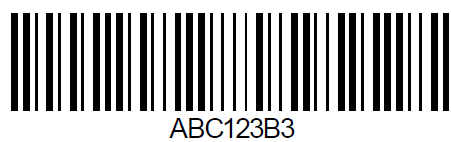
1977 hat die American Blood Commission Codabar 2 als Standardsymbologie für Blutbanken definiert (=ABC Codabar) |
|
CODABLOCK F
|
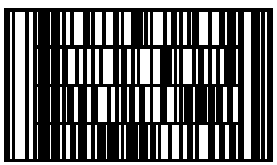
CODABLOCK_F |
Codablock F ist de facto eine „gestapelte“ Code-128-Symbologie. Sie basiert auf Code 128 – jede Zeile ist ein einzelnes Code-128-Symbol, erweitert um Zeilenindikatoren und zusätzliche Prüfziffern. Der UCC/EAN/GS1-Formatindikator wird unterstützt. |
|
Code 2 of 5 Standard
|
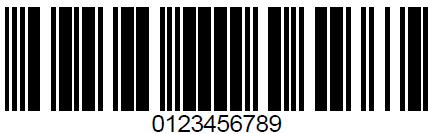
Code2OF5 |
Dies ist ein selbstprüfender Code. Er wird für industrielle Anwendungen, Artikelnummerierung, Filmentwicklung, Kartenverkauf verwendet. |
|
Code 2 of 5 Interleaved
|
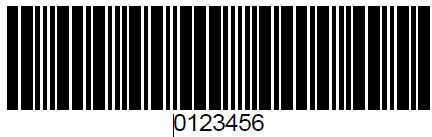
Code2OF5IL |
Häufig benutzt für Artikelnummerierung, industrielle Anwendungen. Dieser selbstprüfende Code bietet durch die kodierenden Zahlenpaare eine hohe Datenkapazität (die erste Ziffer wird in den Strichen und die zweite in den Lücken kodiert). Dadurch kann diese Symbologie nur eine gerade Anzahl von Ziffern kodieren. Wenn die Anzahl der Ziffern ungerade ist, wird automatisch eine vorangestellte Null eingefügt. |
|
Code 2 of 5 IATA
|
Code2OF5IATA |
Dies ist ein selbstprüfender Code. Start-/Stopp-Zeichen sind identisch mit Code 2 of 5 Industry. Er unterstützt das Lesen auf Distanz (> 1m) und kann mit sehr einfachen Drucktechniken gedruckt werden. Er wird für die Gepäckabfertigung in der Luftfahrt verwendet (International Air Transport Agency = IATA). |
|
Code 2 of 5 Matrix
|
Code2OF5M |
Dies ist ein selbstprüfender Code. Er wird für industrielle Anwendungen, Artikelnummerierung, Filmentwicklung, Kartenverkauf verwendet. |
|
Code 2 of 5 Data Logic
|
Code2OF5DL |
Diese Symbologie ist eine proprietäre Variante von Code 2 of 5 Standard. |
|
Code 2 of 5 Industry
|
Code2OF5IND |
|
|
Code 11
|
Code11 |
Wird hauptsächlich in der Telekommunikation zur Markierung von Geräten und Komponenten verwendet. |
|
Code 32
|
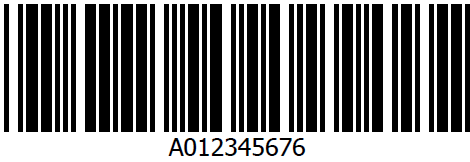
Code32 |
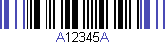
Wird von der italienischen Pharmaindustrie verwendet. Der Code wird auch als Italian Pharmacode bezeichnet. Die Code-32-Nummer, bestehend aus 9 Ziffern, wird in einen äquivalenten Code-39-Barcode mit 6 Zeichen umgewandelt. Dem menschenlesbaren Text wird ein „A“ vorangestellt, das nicht kodiert wird. |
|
Code 39
|
Code39 |
Weit verbreitet in Industrie, Organisationen und Handel. 1974 von INTERMEC entwickelt und durch ANSI MH 10.8 M-1983 und MIL-STD-1189 standardisiert. |
|
Code 39 Full ASCII
|
Code39FA |
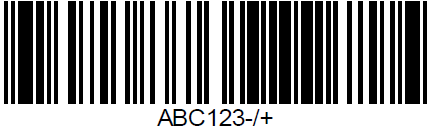
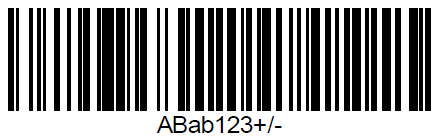
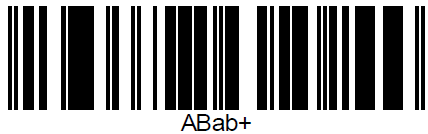
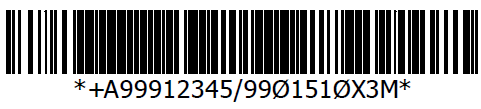
Dieser Barcode wird selten verwendet, da Code 128 eine wesentlich bessere Komprimierung bietet. Verwendet dieselbe Symbologie wie Code 39, kodiert aber auch Kleinbuchstaben und Sonderzeichen („+A“ ergibt beim Scannen ein kleines „a“). Der Scanner muss für die Dekodierung dieses Barcodes korrekt konfiguriert sein. |
|
Code 93
|
Code93 |
Code 93 wurde entwickelt, um höhere Informationsdichten zu erreichen (im Vergleich zu Code 39). Code-Verkettung ist möglich (wenn das erste kodierte Zeichen ein Leerzeichen ist, werden nachfolgende Barcodes vom Scanner verkettet). |
|
Code 93 Full ASCII |
Code93FA |
Basiert auf Code 93, kodiert aber den vollständigen ASCII-Zeichensatz. Eines der vier verfügbaren Steuerzeichen wird verwendet, um in die ASCII-Zeichentabelle zu wechseln. |
|
Code 128
|
Code128 |
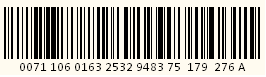
Moderne Symbologie mit hoher Informationsdichte. Wird in allen Bereichen intensiv eingesetzt. Verwendet eine eingebaute Prüfziffer (Modulo 103). Diese Prüfziffer ist Teil des Codes und kann nicht weggelassen werden. Sie wird nie im Klartext gedruckt. Scanner prüfen sie beim Lesen eines Codes, liefern die Prüfziffer aber nicht an angeschlossene Systeme. |
|
Code 128 Subset A
|
Code128A |
Eine Variante von Code 128, die den Zeichensatz (Subset) A verwendet. Sie eignet sich zur Kodierung von Großbuchstaben und ASCII-Steuersequenzen. Sie wechselt bei Bedarf zu anderen Code-128-Subsets. |
|
Code 128 Subset B
|
Code128B |
Eine Variante von Code 128, die den Zeichensatz (Subset) B verwendet. Sie eignet sich zur Kodierung von Klein- & Großbuchstaben. Sie wechselt bei Bedarf zu anderen Code-128-Subsets. |
|
Code 128 Subset C
|
Code128C |
Eine Variante von Code 128, die den Zeichensatz (Subset) C verwendet. Sie eignet sich zur Kodierung von Ziffern. Sie wechselt bei Bedarf zu anderen Code-128-Subsets. |
|
|
DAFT |
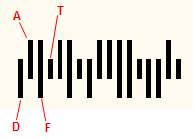
Übersicht DAFT Code ist keine Symbologie. Es ist eine Technik zur Erzeugung beliebiger Postleitzahl-Barcodes. Es kann nützlich sein, wenn Post-Barcodes als DAFT-Strom anstelle des ursprünglichen Ziffernstroms vorliegen. DAFT-Ströme werden vom Australian Postal Code, USPS Intelligent Mail Code und dem Royal Mail 4-State Code verwendet. Ein typischer DAFT-Strom sieht so aus: AAFAAAFTFFAADTADTATTFADFFAFFAAATAFTTDDDAAADDADTAATTTTATFTDDDDFTDF Jedes Eingabezeichen steht für einen bestimmten Strichtyp. Es gibt 4 verschiedene Strichtypen, wie unten angegeben. Eigenschaften Die einzig gültigen Zeichen sind „DAFT“ oder „daft“. Jedes Eingabezeichen steht für einen bestimmten Strichtyp:
Standardmäßig zeigt die DAFT-Methode lesbaren Text an. Verwenden Sie "HideReadableText=true", wenn dies nicht gewünscht ist. |
|
Verwendung: Verwenden Sie den DAFT Code, um das Problem zu umgehen, dass der USPS Intelligent Mail Barcode nur Ziffern als Eingabe akzeptiert. Um die Ziffern in den DAFT-Strom zu kodieren, müssen Sie Encoder für bestimmte Barcodes verwenden. Gehen Sie wie folgt vor:
|
||
|
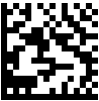
Data Matrix
|
DataMatrix |
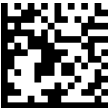
Used for encoding large amounts of data and is also ideal for marking small objects. Die Symbolgröße passt sich automatisch an die Menge der Eingabedaten an. It is the de-facto standard symbology in the following areas:
|
|
Deutsche Post Leitcode
|
DPLeit |
Diese Symbologie wird von der Deutschen Post verwendet. Der Code ist im Grunde ein Code 2 of 5 Interleaved, erweitert um eine spezielle Prüfzifferberechnung. Er wird zur Kodierung der Postleitzahl, Straße und Hausnummer der Sendung verwendet. |
|
Deutsche Post Identcode
|
DPIdent |
This symbology is used by Deutsche Post. The code is basically a Code 2 of 5 interleaved enhanced with a special check digit calculation. |
|
DotCode
|
DotCode |
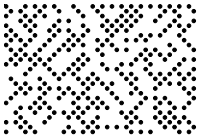
DotCode is 2 dimensional dot code symbology designed to be reliably readable when printed by high-speed inkjet or laser dot technologies. The encoding modes of DotCode are based on the Code128 data encoding (with modes A, B, and C) extended by a so called Binary Mode. The default interpretation for DotCode data is ECI 000003 representing the Latin-I character set. The DotCode symbology does not have absolute capacity limits, but a maximum symbol size of 124x124 dots is recommended. Note: DotCode is not supported in PDF format. |
|
DPD Code
|
DPD |
DPD Code is used by DPD (Deutscher Paket Dienst). It is based on Code 128 and is limited to 28 encoded characters. The encoded data and the human readable text differ slightly. |
|
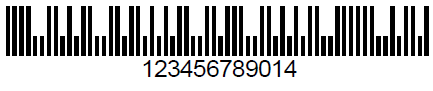
EAN 8
|
EAN8 |
Creates an EAN8 encoding of the expression. |
|
EAN 8 with 2 Digits Add On
|
EAN8P2 |
Extends EAN-8 with 2 add-on digits which are mainly used for encoding the price or the weight. The check digit will be calculated automatically if it not specified in the input data. Also used for bar-coding paperbacks or newspapers. In this case a 2(3) digits country code and a 4(5) article code are encoded. |
|
EAN 8 with 5 Digits Add On
|
EAN8P5 |
Extends EAN-8 with 5 add-on digits which are mainly used for encoding the price or the weight. The check digit will be calculated automatically if it not specified in the input data. |
|
EAN 13
|
EAN13 |
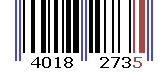
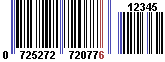
Reserved for the European Article Numbering (EAN) system. Used for identifying articles or products uniquely. Encoded are a 2-digit country code, 5-digits manufacturer code and a 5 digits products code. |
|
EAN 13 with 2 Digits Add-On
|
EAN13P2 |
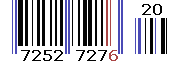
Diese Symbologie erweitert EAN-13 um 2 zusätzliche Ziffern. The check digit will be calculated automatically if it is not specified in the input data. |
|
EAN 13 with 5 Digits Add-On
|
EAN13P5 |
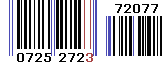
Diese Symbologie erweitert EAN-13 um 5 zusätzliche Ziffern. The check digit will be calculated automatically if it not specified in the input data. |
|
EAN-14
|
EAN14 |
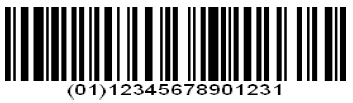
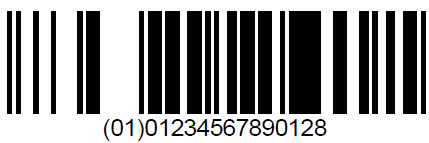
EAN-14 is used to encode the GTIN (Global Trade Item Number) for numbering trade items. EAN-14 uses EAN-128 with Application identifier (AI) 01. The AI is prefixed automatically; it must not be part of the input data. The check digit is calculated automatically if not specified in the input data (that is when only 13 digits are used). |
|
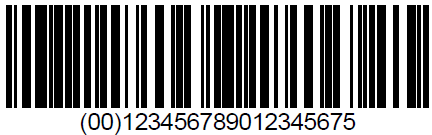
EAN 128
|
|
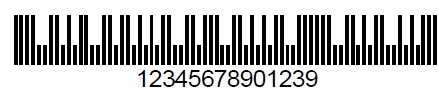
Based upon Code-128. Identisch mit UCC-128 und GS1-128. Es hat ein FNC1-Zeichen an der 1. Position (nach dem Startcode). Dies ermöglicht es Scannern und Datenverarbeitungssoftware, EAN-128 von anderen Symbologien zu unterscheiden. Weit verbreitet (Einzelhandel, Logistik, Lebensmittel und Getränke usw.). Neben der Artikelnummer werden Mengen, Gewichte, Preise, Daten und andere Informationen in strukturierter Weise kodiert. |
|
Flattenmarken
|
Flattenmarken |
Ein spezieller „Barcode”, der zur Erkennung der richtigen Seitenreihenfolge in Druckereien verwendet wird. |
|
GS1 128
|
GS1_128 |
GS1-128 ist lediglich ein anderer Name für den bestehenden EAN-128 (oder UCC-128) Barcode. Die Normungsorganisationen EAN und UCC haben GS1 gegründet, um ihre unterschiedlichen Standards zu globalisieren (und zu harmonisieren). |
|
GS1 DataBar (RSS-14)
|
GS1DataBar |
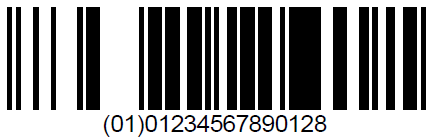
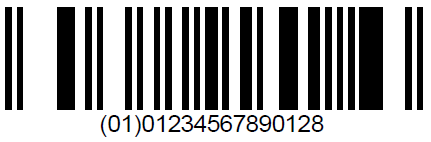
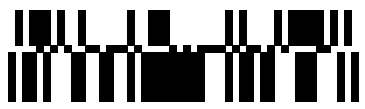
GS1 DataBar wird zur Kodierung der GTIN (Global Trade Item Number) mit dem Anwendungskennzeichen (AI) „01” verwendet. Die GTIN besteht aus einem Verpackungsindikator (0..9), gefolgt von einer 12-stelligen Nummer (aus dem EAN-13-Artikelnummernsystem) und einer Prüfziffer. Die Prüfziffer an der 14. Position wird automatisch berechnet, wenn sie nicht in den Eingabedaten enthalten ist. |
|
GS1 DataBar Limited
|
GS1DataBarLtd |
Diese Symbologie ist ähnlich wie GS1 DataBar, ist jedoch kleiner und auf einen Verpackungsindikator (erste Ziffer) von 0 oder 1 beschränkt. |
|
GS1 DataBar Expanded
|
GS1DataBarExp |
Dies ist eine Symbologie mit variabler Länge. Daten sollten mit Anwendungskennzeichen (AIs) kodiert werden. Omnidirektionales Scannen ist möglich. |
|
GS1 DataBar Truncated
|
GS1DataBarTrunc |
Diese Symbologie ist ähnlich wie GS1 DataBar, jedoch sollte die Höhe mindestens 13X betragen. Omnidirektionales Scannen ist möglicherweise nicht möglich. |
|
GS1 DataBar Stacked
|
GS1DataBarStacked |
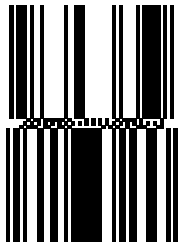
Diese Symbologie ist ähnlich wie GS1 DataBar, wird jedoch in 2 Zeilen aufgeteilt, um das Symbol kleiner zu machen. Sie wird für pharmazeutische Verpackungen verwendet. Omnidirektionales Scannen ist nicht möglich. |
|
GS1 DataBar Stacked Omni-directional
|
GS1DataBarStackedOmni |
Diese Symbologie ist ähnlich wie GS1 DataBar Stacked und unterstützt omnidirektionales Scannen. |
|
GS1 DataBar Expanded Stacked |
GS1DataBarExpStacked |
Dies ist die gestapelte Version von GS1 DataBar Expanded. Die Anzahl der Datensegmente pro Zeile kann zwischen 4 und 22 variieren. Die Standardanzahl der Datensegmente beträgt 4. |
|
GS1 QR Code
|
GS1 QR Code |
GS1 QR Code ist eine Variante des QR Code, die den GS1-Spezifikationen entspricht. Es handelt sich um einen standardisierten zweidimensionalen Barcode, der speziell für die Weitergabe erweiterter Verpackungsinformationen wie Chargennummer, Produkt-ID und Menge entwickelt wurde. GS1 QR Code kann alle GS1-Schlüssel und -Attribute enthalten. Er kann zur Speicherung von Handelsartikelinformationen wie Verfallsdatum, Seriennummer oder Chargen-/Losnummer verwendet werden. |
|
GS1 Data Matrix
|
GS1 DataMatrix |
GS1 DataMatrix ist eine Variante der Data Matrix-Symbologie, die den GS1-Spezifikationen entspricht. GS1 DataMatrix wird unter anderem in der Luft- und Raumfahrt, der Medizingeräteherstellung und der pharmazeutischen Industrie sowie vom US-Verteidigungsministerium verwendet. |
|
Han Xin Code
|
HanXinCode |
Han Xin Code ist eine 2D-Matrix-Symbologie, die zur Kodierung großer Datenmengen verwendet wird und eine spezielle Unterstützung für die Kodierung chinesischer Zeichen (Zeichensatz GB18030) bietet. |
|
HIBC LIC 128
|
HIBCLic128 |
A Health Industry barcode. LIC - Label Identification Code (LIC) is specified by the Supplier Labeling Standard. HIBC LIC 128 is based on the symbology Code 128. The data format corresponds to the HIBC LIC Format. An additional modulo 43 check digit is required. |
|
HIBC LIC 3 Of 9 (HIBC LIC 39) 
|
HIBCLic3Of9 |
A Health Industry barcode. LIC - Label Identification Code (LIC) is specified by the Supplier Labeling Standard. HIBC LIC 39 basiert auf der Symbologie Code 39. The data format corresponds to the HIBC LIC Format. An additional modulo 43 check digit is required. |
|
HIBC LIC Aztec Code
|
HIBCLICAztec |
A Health Industry barcode. LIC - Label Identification Code (LIC) is specified by the Supplier Labeling Standard. HIBC LIC Aztec Code is based on the 2D symbology Aztec Code. The data format corresponds to the HIBC LIC Format. An additional modulo-43 check digit is required. |
|
HIBC LIC Codablock F
|
HIBCLicCODABLOCK_F |
A Health Industry barcode. LIC - Label Identification Code (LIC) is specified by the Supplier Labeling Standard. HIBC LIC Codablock F is based on the stacked symbology Codablock F. The data format corresponds to the HIBC LIC Format. An additional modulo 43 check digit is required. |
|
HIBC LIC Data Matrix
|
HIBCLicDataMatrix |
A Health Industry barcode. LIC - Label Identification Code (LIC) is specified by the Supplier Labeling Standard. HIBC LIC Data Matrix basiert auf der 2D-Symbologie Data Matrix. The data format corresponds to the HIBC LIC Format. An additional modulo 43 check digit is required. |
|
HIBC LIC MicroPDF417
|
HIBCLicMPDF417 |
A Health Industry barcode. LIC - Label Identification Code (LIC) is specified by the Supplier Labeling Standard. HIBC LIC MicroPDF417 basiert auf der 2D-Symbologie MicroPDF417. The data format corresponds to the HIBC LIC Format. An additional modulo 43 check digit is required. |
|
HIBC LIC PDF417
|
HIBCLicPDF417 |
A Health Industry barcode. LIC - Label Identification Code (LIC) is specified by the Supplier Labeling Standard. HIBC LIC PDF417 basiert auf der 2D-Symbologie PDF417. The data format corresponds to the HIBC LIC Format. An additional modulo 43 check digit is required. |
|
HIBC Lic QR Code
|
HIBCLicQRCode |
A Health Industry barcode. LIC - Label Identification Code (LIC) is specified by the Supplier Labeling Standard. HIBC LIC QR-Code basiert auf der 2D-Symbologie QR-Code. The data format corresponds to the HIBC LIC Format. An additional modulo 43 check digit is required. |
|
HIBC Pas 128
|
HIBCPas128 |
A Health Industry Barcode. PAS - Provider Applications Standard (PAS). HIBC PAS 128 basiert auf der Symbologie Code 128. The data format corresponds to the HIBC PAS Format. An additional modulo 43 check digit is required. |
|
HIBC Pas 3 of 9 (HIBC Pas 39)
|
HIBCPas3OF9 |
A Health Industry Barcode. PAS - Provider Applications Standard (PAS). HIBC PAS 39 basiert auf der Symbologie Code 39. The data format corresponds to the HIBC PAS Format. An additional modulo 43 check digit is required. |
|
HIBC PAS Aztec Code
|
HIBCPASAztec |
A Health Industry Barcode. HIBC PAS Aztec Code bases on the 2D symbology Aztec Code. The data format corresponds to the HIBC PAS Format. An additional modulo-43 check digit is required. |
|
HIBC PAS Codablock F
|
HIBCPasCODABLOCK_F |
A Health Industry Barcode. PAS - Provider Applications Standard (PAS). HIBC PAS Codablock F is based on the stacked symbology Codablock F. The data format corresponds to the HIBC PAS Format. An additional modulo 43 check digit is required. |
|
HIBC Pas Data Matrix
|
HIBCPasData Matrix |
A Health Industry Barcode. PAS - Provider Applications Standard (PAS). HIBC PAS Data Matrix basiert auf der 2D-Symbologie Data Matrix. The data format corresponds to the HIBC PAS Format. An additional modulo 43 check digit is required. |
|
HIBC PAS MicroPDF417
|
HIBCPasMPDF417 |
A Health Industry Barcode. PAS - Provider Applications Standard (PAS). HIBC PAS MicroPDF417 basiert auf der 2D-Symbologie MicroPDF417. The data format corresponds to the HIBC PAS Format. An additional modulo 43 check digit is required. |
|
HIBC Pas PDF417
|
HIBCPasPDF417 |
A Health Industry Barcode. PAS - Provider Applications Standard (PAS). HIBC PAS PDF417 basiert auf der 2D-Symbologie PDF417. The data format corresponds to the HIBC PAS Format. An additional modulo 43 check digit is required. |
|
HIBC Pas QR Code
|
HIBCPasQRCode |
A Health Industry Barcode. PAS - Provider Applications Standard (PAS). HIBC PAS QR-Code basiert auf der 2D-Symbologie QR-Code. The data format corresponds to the HIBC PAS Format. An additional modulo 43 check digit is required. |
|
ISBN 13
|
ISBN13 |
ISBN ist die Abkürzung für International Standard Book Number. It uses the symbology EAN-13. When encoding ISBN in an EAN-13 barcode, the ISBN number is preceded by the number 978 and the ISBN check digit is not used. The customer must only enter 10 digits. ISBN codes with 10 digits are automatically converted to the newer ISBN with 13 digits. |
|
ISBN 13 with 5 Add-On Digits
|
ISBN13P5 |
Extension of the ISBN 13 with additional 5 digits. The add-on is used for additional pricing information. |
|
ISMN
|
ISMN |
ISMN stands for International Standard Music Number. The ISMN is a standardized international code, which identifies printed music. Der ISMN werden die Ziffern 9790 vorangestellt. The ISMN (=EAN-13) check digit is calculated and appended automatically! |
|
ISSN
|
ISSN |
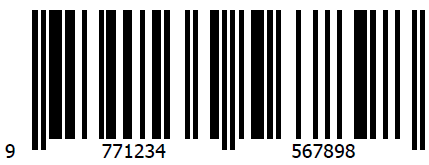
ISSN steht für International Standard Serial Number. The ISSN is a standardized international code, which identifies any serial publication independently of its country of origin, its language or alphabet, or its frequency, medium, etc. The ISSN is preceded by the digits 977. The check digit of an 8-digit ISSN code (the last of the 8 digits) must be omitted! A two digit price code, almost always "00", is added to the end. Finally the EAN-13 check digit is added. |
|
ISSN with 2 Add-On Digits
|
ISSNP2 |
Extension of ISSN barcode symbology with 2 add-on digits. |
|
Italian Postal 2 of 5
|
ItalianPostal2Of5 |
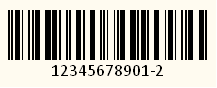
Italian Postal Code 2 of 5 is based upon Code 2 of 5 Interleaved, but it is limited to 12 digits (11 usable digits + 1 modulo 10 check digit). |
|
ITF-14
|
ITF14 |
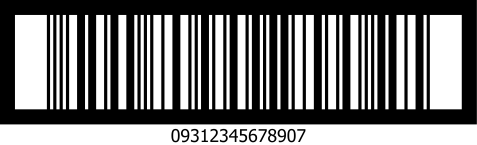
Encodes the GTIN-14, this is a 14-digit number used to identify trade items at various packaging levels (also referred as GTIN). ITF-14 basiert auf der Code 2 of 5 Interleaved-Symbologie. It encodes 14 digits (13 usable digits + 1 modulo 10 check digit). The check digit method complies with the EAN-14 method. ITF-14 uses “Bearer Bars”, these are horizontal or surrounding bars, to prevent misreads. |
|
Japanese Postal Code
|
|
Wird vom japanischen Postsystem verwendet. Sie können 7 Ziffern gefolgt von Block- und Straßennummer (Großbuchstaben alphanumerisch) kodieren. Der spezielle Kompaktierungsmodus für japanische Zeichen kann bei Bedarf aktiviert werden. Diese Barcode-Symbologie unterstützt zwei Methoden zur Bereitstellung der Barcode-Daten (mit und ohne Datenextraktion aus dem japanischen Adressfeld B). |
|
KIX - Dutch Postal Code
|
KIX |
This code is used by the Dutch Postal system. |
|
Korean Postal Authority
|
KoreanPostalAuth |
This code is used by the Korean Postal system. Encoded are a 6-digit ZIP and 1 check digit. |
|
LOGMARS
|
LOGMARS |
Dies ist eine spezielle Variante von Code 39, die vom US-Verteidigungsministerium verwendet wird. Dieser Standard definiert akzeptable Bereiche für eine Reihe von Variablen, darunter Dichte, Verhältnis, Strichhöhe und Größe der menschenlesbaren Interpretationszeile. Die Modulo-43-Prüfziffer, die für Code 39 optional ist, wird in der Spezifikation definiert und empfohlen. |
|
MaxiCode
|
MaxiCode |
MaxiCode is in use (and was invented) by UPS®. MaxiCode represents data by drawing hexagonal items, which are arranged around a circular center (a so called "Bull's Eye"). Different encoding modes for including postal information (SCM) can be adjusted: UPS Modes are Mode 2 (US Carrier) and Mode 3 (International Carrier). |
|
MicroPDF417
|
MicroPDF |
Wird zur Kodierung großer Datenmengen verwendet. |
|
Micro QR-Code
|
MicroQRCode |
This is small variant of QR-Code with a reduced number of overhead modules and a restricted range of sizes. The symbol size adjusts automatically depending on input data. Micro QR-Code has 4 different symbol sizes (M1-M4). The smallest version (=size) M1 is restricted to numeric data and error detection, M2 may contain also alphanumeric values, and M3 and M4 may use the whole range of the QR-Code character sets (bytes, Kanji). |
|
MSI (Modified Plessey)
|
MSI |
A variant of the Plessey-Code. |
|
National Trade Item Number (NTIN)
|
NTIN |
A Health Industry barcode. The content of the NTIN Code is specified by GS1. It was developed in order to get unique pharmaceutical product codes on an international level. It embeds the already existing national coding systems, like PZN in Germany. |
|
NVE 18 (Nummer der Versandeinheit)
|
NVE18 |
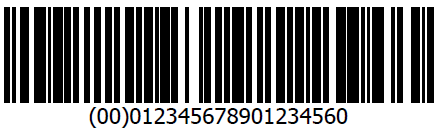
NVE stands for “Nummer der Versandeinheit” (a German term for tracking number). This code uses an EAN-128 symbology with a prefixed Application Identifier (AI) 00. The AI “00” is inserted automatically and must not be included in the input data. It is similar to SSCC-18. |
|
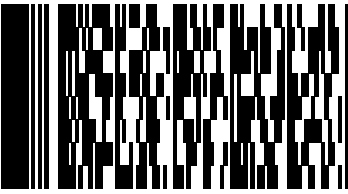
PDF417
|
PDF417 |
Wird zur Kodierung großer Datenmengen verwendet. Es ist die De-facto-2D-Standardsymbologie in der Automobilindustrie. |
|
PDF417 Truncated
|
PDF417Trunc |
Wird zur Kodierung großer Datenmengen verwendet. The symbol is divided into rows and columns. A data-density of up to 900 characters per square inch is possible. |
|
Pharmacode One-Track
|
Pharma1 |
Used in pharmaceutical areas. Pharmacode supports colored bars. The data for the bars/spaces is encoded directly in the property Text:
|
|
Pharmacode Two-Track
|
Pharma2 |
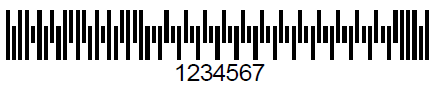
Der Pharmacode weist den Strichen numerische Werte zu. Er wird für die Medikamentenverpackung im pharmazeutischen Bereich verwendet; für kleine Etiketten. Üblicherweise wird der Pharmacode ohne menschenlesbaren Text gedruckt. |
|
Planet 12
|
Planet12 |
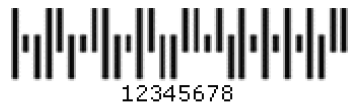
This code was developed for the United States Postal Services. It is a 3-of-5 variant of the Postnet barcode. |
|
Planet 14
|
Planet14 |
This code was developed for the United States Postal Services. It is a 3-of-5 variant of the Postnet barcode. |
|
PNZ7
|
PZN7 |
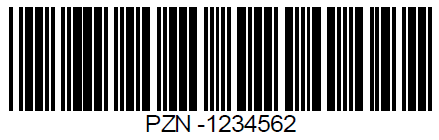
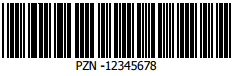
PNZ - Pharma Zentralnummer PZN verwendet Code 39 als Basissymbologie. It uses a special check digit and the human readable text always contains the prefix “PZN-“ (which is not encoded in the barcode data). PZN7 is valid until the end of 2012 and will be replaced by PZN8 with the beginning of year 2013. PZN7 numbers will stay valid but are going to be extended to 8 digits by a leading “0”. |
|
Plessey Code
|
Plessey |
Plessey code is in use primarily in libraries. It is a pulse-width modulated code and was developed by Plessey Company Limited in UK. The check digit is calculated with a polynomial CRC algorithm and is always part of the symbology. |
|
Plessey Bidirectional |
PlesseyBidir |
|
|
Pharmacy Product Number
|
PPN |
The Pharmacy Product Number (PPN) barcode is a variant of Data Matrix that is used for the distribution and marking of health care and pharmaceutical products worldwide. It was developed in accordance with the 2011/62/EU directive to harmonize the separate coding systems that the countries in the European Union use, and it also accommodates international code systems, such as the Global Trade Item Number (GTIN). |
|
PZN8
|
PZN8 |
PZN (Pharma-Zentral-Nummer) is a code for medicine identification in Germany. PZN verwendet Code 39 als Basissymbologie. It uses a special check digit and the human readable text always contains the prefix “PZN-“ (which is not encoded in the barcode data). PZN8 replaces the old PZN and offers a larger number range by the additional digit. |
|
QR-Code
|
QRCode |
Used to encode large quantities of data and was developed for fast readability (QR = Quick Response Code) by Denso. The symbol size adjusts automatically depending on input data. Special industry formats are supported. |
|
Royal Mail 4 State
|
RM4SCC |
Dieser Code ist ein höhenmodulierter Code mit 4 verschiedenen vertikalen Strichen. Er wird in Massensendungsanwendungen (Cleanmail, Mailsort) der Royal Mail, des Vereinigten Königreichs und Singapurs (auch SinPost-Barcode genannt) verwendet. Kodiert werden PLZs. |
|
Royal Mail 2D CMDM Mailmark
|
CMDM_Mailmark |
A Complex Mail Data Mark (CMDM) is a 2 Dimensional barcode that has the specified format of a Data Matrix type ECC200 code complying with the international standard ISO/IEC 16022, version 2006. XMPie supports Formats 7, 9 and 29 of the CMDM Mailmark™ barcode:
|
|
Royal Mail Mailmark 4-state
|
4state_Mailmark |
Dieser Code ist ein höhenmodulierter Code, der vier verschiedene vertikale Balken verwendet. Er wird von Royal Mail für Postdienste definiert und verwendet. Die folgenden Varianten von Mailmark 4-state werden verwendet:
Jedes Feld innerhalb eines Mailmark 4-state hat eine feste und definierte Länge. Die Gesamtlänge muss entweder 22 (für Variante C) oder 26 Zeichen (für Variante L) betragen. Fehlende oder optionale Attribute müssen mit dem Leerzeichen aufgefüllt werden. |
|
SSCC-18
|
SSCC18 |
SSCC-18 wird zur Kodierung des Serial Shipping Container Code verwendet. Er dient der weltweit eindeutigen Identifizierung von Handelsartikeln. SSCC-18 basiert auf der EAN-128-Symbologie mit Anwendungskennzeichen (AI) 00. Die Prüfziffer wird automatisch kodiert, wenn 17 Ziffern als Eingabedaten verwendet werden. |
|
Swedish Postal Shipment Item ID
|
SwedishPostal |
Dieser Code basiert auf Code 128 und wird auf Swedish Postal-Etiketten verwendet. Die Prüfziffer wird nach der gewichteten Modulo-11-Methode für den Weltpostverein (Universal Postal Union) berechnet (für 8 Ziffern). |
|
Swiss QR Code
|
Swiss QR Code |
Der Swiss QR Code ist Bestandteil der sogenannten QR-Rechnung, die von SIX Interbank Clearing AG definiert wird. Er enthält die erforderlichen Informationen, um Kundenzahlungen per Barcode-Scanner zu initiieren. Der Swiss QR Code basiert auf der QR-Code-Symbologie, erweitert um ein schwarzes Schweizer Kreuz in der Mitte des Codes. |
|
Telepen
|
Telepen |
Telepen kann nur Zeichenpaare kodieren. Ein Paar muss aus 2 Ziffern oder aus einer Ziffer und dem Buchstaben ‘X’ bestehen. |
|
Telepen Alpha
|
TelepenAlpha |
Telepen Alpha ist die alphanumerische Variante von Telepen. |
|
UCC 128
|
UCC128 |
Identisch mit EAN-128. |
|
UPC-A
|
UPCA |
UPC A wird für die Artikel-Barkodierung verwendet. Er wird in den Vereinigten Staaten zur Markierung von Produkten im Einzelhandel verwendet (ähnlich wie EAN). |
|
UPC-A with 2 Add-On Digits
|
UPCAP2 |
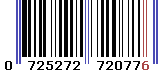
Identisch mit UPC-A, aber mit 2 zusätzlichen Ziffern. Die Prüfziffer wird automatisch berechnet, wenn sie nicht in den Eingabedaten angegeben ist. Die Prüfziffer wird nicht im Klartext angezeigt. |
|
UPC-A with 5 Add-On Digits
|
UPCAP5 |
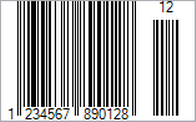
Identisch mit UPC-A, aber mit 5 zusätzlichen Ziffern. Die Prüfziffer wird automatisch berechnet, wenn sie nicht in den Eingabedaten angegeben ist. Die Prüfziffer wird nicht im Klartext angezeigt. |
|
UPC 12
|
UPC12 |
Die Symbologien UPC-A und UPC-12 sind identisch. Die Prüfziffer wird automatisch berechnet, wenn sie nicht in den Eingabedaten angegeben ist (d. h. wenn nur 11 Ziffern zur Erstellung des Codes verwendet werden). |
|
UPC-E
|
UPCE |
UPC-E wird zur Produktkennzeichnung und Artikel-Barkodierung verwendet. |
|
UPC-E with 2 Add-On Digits
|
UPCEP2 |
Identisch mit UPC Version E, aber mit 2 zusätzlichen Ziffern. Die Prüfziffer wird automatisch berechnet, wenn sie nicht in den Eingabedaten angegeben ist. Die Prüfziffer wird nicht im Klartext angezeigt. |
|
UPC-E with 5 Add-On Digits
|
UPCEP5 |
Identisch mit UPC Version E, aber mit 5 zusätzlichen Ziffern. Die Prüfziffer wird automatisch berechnet, wenn sie nicht in den Eingabedaten angegeben ist. Die Prüfziffer wird nicht im Klartext angezeigt. |
|
UPU S10
|
UPU_S10 |
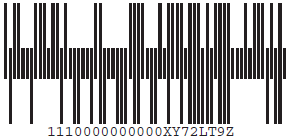
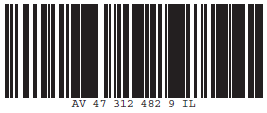
Dieser Code basiert auf Code 128 und wird auf Postetiketten in verschiedenen Ländern verwendet. Der Code besteht aus:
Die Prüfziffer wird wie folgt berechnet: Weisen Sie den 8 Ziffern von links nach rechts die Gewichte 8, 6, 4, 2, 3, 5, 9, 7 zu. Berechnen Sie S, die Summe jeder Ziffer multipliziert mit ihrem Gewicht. Zum Beispiel: Für die Nummer 47312482 ergibt sich S = 4*8 + 7*6 + 3*4 + 1*2 + 2*3 + 4*5 + 8*9 + 2*7 = 200 Berechnen Sie die Prüfziffer C aus C = 11 - (S mod 11) Wenn C = 10, ändern Sie C zu 0 If C = 11, change to C = 5 Für das Beispiel 47312482 ergibt sich C = 11 - (200 mod 11) = 11 - 2 = 9. |
|
USPS Intelligent Mail
|
USPSIntelligentMail |
This symbology is also known as:
The following data is encoded:
Note: If you want to encode this barcode, use the Daft code. |
|
USPS Intelligent Mail Package Barcode
|
USPSIMPackage |
Die Barcode-Daten bestehen aus Routing-Informationen und Tracking-Informationen. The Routing information is optional. It is not printed in the human visible text and consists of:
The Tracking information is mandatory. It is printed in the human readable text and consists of 3 types of tracking information:
If you wish to include the Routing information, you must use the parameter “EscapeSequences=true”. The stream itself consists of both sub-streams (8 or 12 digits for the Routing information and 22 to 26 digits for the Tracking information). The two sub-streams should be separated by the \F symbol. In QLingo, this symbol should include two backslashes \\F; e.g. “420123456789\\F9212391234567812345670” The last digit is checksum modulo 10 of all the digits after F. |
|
USPS PostNet 5
|
USPSPostNet5 |
Wird vom United States Postal Service für Massensendungen verwendet. Kodiert wird eine 5-stellige PLZ. Die Prüfziffer wird automatisch berechnet. Sie kann nicht in den Eingabedaten angegeben werden. |
|
USPS PostNet 6
|
USPSPostNet6 |
Identical to USPS Postnet 5, but the check digit can be specified freely (the 6th digit). To be used only if the (correctly calculated) check digit is already part of the input data. |
|
USPS PostNet 9
|
USPSPostNet9 |
Used by the United States Postal Services for mass-mailing applications. Encoded are a 5 digit ZIP-code and 4 additional digits. The check digit is computed automatically, it cannot be specified in the input data. |
|
USPS PostNet 10
|
USPSPostNet10 |
Wie Postnet 9, aber die Prüfziffer kann frei angegeben werden (die 10. Ziffer). Nur zu verwenden, wenn the (correctly calculated) check digit is already part of the input data. |
|
USPS PostNet 11
|
USPSPostNet11 |
Wird vom United States Postal Service für Massensendungen verwendet. Kodiert werden eine 5-stellige PLZ und 4 bis 9 zusätzliche Ziffern. Die Prüfziffer wird automatisch berechnet. Sie kann nicht in den Eingabedaten angegeben werden. |
|
USPS PostNet 12
|
USPSPostNet12 |
Wie Postnet 11, aber die Prüfziffer kann frei angegeben werden (die 12. Ziffer). Nur zu verwenden, wenn die (korrekt berechnete) Prüfziffer bereits Teil der Eingabedaten ist. |
|
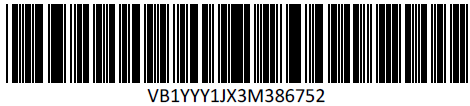
VIN Code
|
VIN |
Wird zur Fahrzeugidentifikation verwendet. Er basiert auf Code 39, enthält aber keine Start- und Stoppzeichen. VIN Code ist in Europa und Nordamerika unterschiedlich implementiert. Beide Arten sind kompatibel, aber die nordamerikanische Version ist strenger definiert. Die Prüfzifferberechnung gilt daher nur für die nordamerikanische Implementierung des Codes. |